

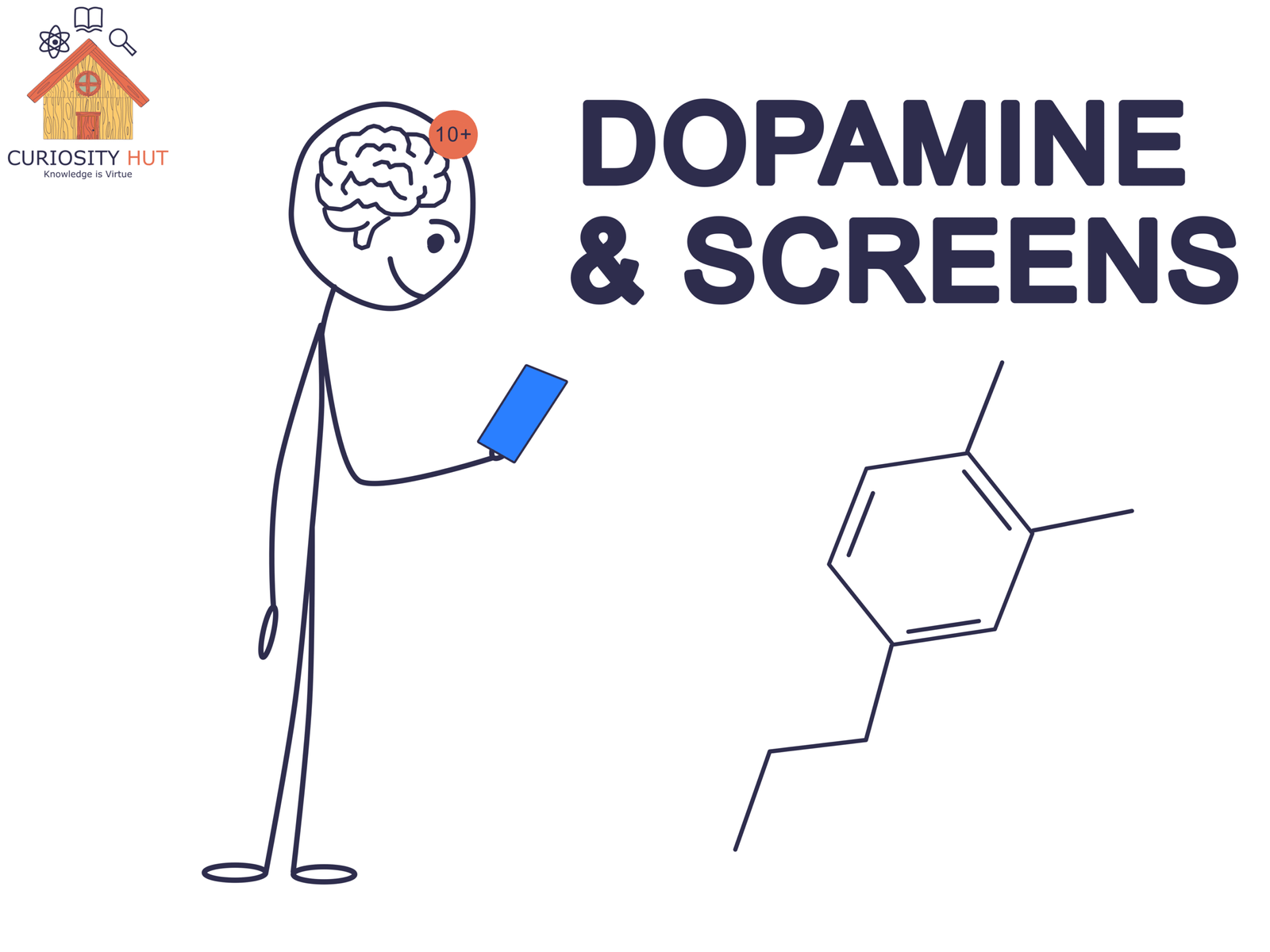
How a tiny molecule shapes motivation, pleasure, addiction, and modern life.
A tiny red badge flashes on your screen. Your finger twitches before you consciously decide to move. A swipe, a reel, a split-second burst of novelty. Something inside your brain wakes up and leans forward, hungry for more. People call it a “dopamine hit,” a “rush,” an “addictive loop,” even “brain rot.” The vocabulary is dramatic, but the sensation is familiar. And beneath it sits one of the most misunderstood chemicals in the body.
Dopamine isn’t the villain in this story. It’s the reason you get out of bed, learn new skills, fall in love, pursue goals, and keep living. It’s a system that evolved long before TikTok, Instagram Reels, or the idea of an attention economy. But the modern world has found clever ways to tug at this ancient circuitry over and over, often more rapidly than it was built to handle. To write off that experience as “dopamine addiction” oversimplifies both the science and the deeper truth: dopamine is not about pleasure. It’s about anticipation, motivation, and meaning.
To understand what’s happening when we scroll endlessly through quick-content feeds, we need to understand what dopamine actually is—and what it isn’t.
What Dopamine Really Does
Dopamine is a neurotransmitter, a chemical messenger that neurons use to communicate. It’s active in several key pathways that influence movement, attention, motivation, learning, and the brain’s reward system. The popular idea that dopamine is the “pleasure molecule” misses the mark. It doesn’t produce the feeling of happiness. Instead, dopamine energizes the pursuit of something that might bring pleasure or reward.
Imagine a spark plug. It doesn’t power the entire engine; it ignites the process that makes the engine run. Dopamine is the ignition. Whether you’re reaching for your phone, chasing a personal goal, or biting into a gyro, dopamine fires during the anticipation and tags the moment as worth remembering. That tag is what creates habits. It’s what teaches the brain that some actions are meaningful enough to repeat.
Subscribe to my Free Newsletter
Sign up for blog updates, science stories, riddles, and occasional musings. No algorithms—just me, writing to you.
How Dopamine Works Behind the Scenes
When you do something rewarding, the brain releases a burst of dopamine into small gaps between neurons. This release activates the brain’s reward pathways—the network that decides what matters. One of dopamine’s most important functions is something researchers call “prediction error.” If an experience is better than expected, dopamine spikes. If it’s worse, dopamine dips. The difference helps your brain update its internal map of what’s worth seeking out.
That’s why novelty matters so much. Your brain is particularly sensitive to surprises, especially ones linked to potential reward. And this is exactly where modern technology enters the story.
Evolution Built Dopamine for Survival—Not Infinite Scroll
Long before phones existed, dopamine’s job was simple: push organisms toward survival. If finding berries or exploring new territory increased your odds of living another day, dopamine made sure you noticed. It motivated early humans to hunt, gather, bond socially, try new routes, and learn from mistakes. This system is ancient, elegant, and highly adaptive.
But it operates in a world of scarcity—scarce food, scarce novelty, scarce information. A world where reward opportunities appeared slowly and unpredictably.
Now imagine dropping that same system into a world where novelty is infinite and arrives at 120 swipes per minute.
The Phone Scroll: A Dopamine Loop by Design
Every time you scroll through a feed of short videos, you engage in what psychologists call a “variable reward schedule.” You don’t know what the next swipe will bring—something funny, surprising, touching, dull, or bizarre. That uncertainty is rocket fuel for the dopamine system. Your brain fires the signal not because the content is amazing, but because the possibility of something amazing exists just one swipe ahead.
This is the key to why quick content feels so gripping. Dopamine responds most intensely not to rewards themselves, but to cues that a reward might happen.
Social media companies didn’t invent this principle. Casinos have used it for decades. But digital platforms have perfected it and made it portable—meaning your dopamine loop is always within reach, glowing at you from your pocket.
Does This Cause “Dopamine Hits” and “Brain Rot”?
These phrases explode across the internet, but they’re not scientific. The brain doesn’t rot, and dopamine doesn’t spike like a drug every time you watch a cat video. What people are describing is something subtler: a mismatch between an ancient motivational system and modern stimulation patterns.
When you scroll for long periods, your dopamine pathways learn that rapid novelty is the reward. That repetition trains the brain to crave constant stimulation. Over time, slow or complex activities—reading a book, working on a project, or even having a long conversation—lose some of their allure. Not because they aren’t rewarding, but because they don’t produce the same quick anticipatory jolts.
Calling this “brain rot” expresses the frustration people feel. But the underlying biology is reversible. The system isn’t broken—it’s adapted to what you feed it.
When Dopamine Is Balanced, Low, or High
A well-regulated dopamine system feels like steady motivation. You wake up with curiosity, take on tasks without dread, and enjoy activities with enough energy to stay engaged.
When dopamine is low, motivation drops. People feel flat, apathetic, fatigued. Clinical low dopamine is linked to conditions like depression and Parkinson’s disease, where movement and motivation are deeply affected.
Too much dopamine or overstimulated dopamine pathways, meanwhile, can contribute to impulsivity, restlessness, and risk-taking. In extreme cases, dysregulated dopamine is involved in conditions like mania or psychosis. But for most people, the issue isn’t medically “high dopamine.” It’s that high-frequency stimulation alters how the brain allocates attention and reward.
Addiction: When the System Gets Hijacked
Addiction happens when a substance or behavior triggers the reward system so intensely and repeatedly that the brain rewires itself around it. Drugs like cocaine and methamphetamine cause enormous dopamine surges—far beyond anything natural—which is why they quickly reshape behavior.
Scrolling isn’t comparable to drugs on a biochemical level. But compulsive patterns form through the same reinforcement mechanism: the brain learns that the path of least resistance to reward is the path you repeat. That’s why people open their phones without thinking, reach for apps during boredom or stress, and struggle to stop once they start.
It’s not chemical enslavement—it’s habit learning at scale.
How to Support a Healthy Dopamine System
The good news: dopamine is plastic. It responds to the environment you create.
Sleep matters enormously; poor sleep lowers dopamine sensitivity and makes reward-seeking more erratic. Food contributes too—your brain makes dopamine from amino acids like tyrosine, found in foods such as poultry, dairy, eggs, beans, and nuts. Movement helps as well; exercise increases dopamine receptor density and supports overall motivational health.
But the most powerful way to reset your dopamine equilibrium is to diversify your sources of reward. Reintroduce activities that play to dopamine’s evolutionary design: novelty through learning, meaningful effort, deep social connection, creativity, challenge, curiosity, rest. When your brain remembers that satisfaction also comes from conversations, hobbies, and slow engagement, the scroll loses some of its power.
This isn’t about quitting phones. It’s about reclaiming control from autopilot.
The Real Takeaway
Dopamine isn’t your enemy. It isn’t tricking you or enslaving you. It’s a signal—your brain’s way of saying, “Pay attention. Something here might matter.” Technology has become very good at provoking that signal. But the solution isn’t demonizing dopamine. It’s learning to work with it.
Your phone can offer connection, creativity, humor, even wonder. But those things shine brightest when they aren’t the only rewards your brain receives. By rebalancing your habits, you’re not “detoxing” or “resetting dopamine.” You’re giving your brain the kind of world it evolved for: one where meaning, not just novelty, drives your life.
Dopamine isn’t the villain. It’s the compass. The real task is deciding where you want it to point.
Subscribe to my Free Newsletter
Sign up for blog updates, science stories, riddles, and occasional musings. No algorithms—just me, writing to you.


[…] Dopamine: Why Your Phone Feels Like a Hit of Life […]