Why a passing shower carries chemistry, memory, and a hint of ancient gods.
The first raindrops hit the ground, and after we are done running for cover, we breathe in. Clean and fresh, dusty, earthy, and sometimes metallic. It feels familiar and comforting, as if the air itself had been replaced.
We love this scent so much that we gave it a name: petrichor. The word comes from Greek—petra for stone, ichor for the fluid said to run through the veins of the gods. Poetic, yes. Accurate, not even close.
Because the smell of rain isn’t divine at all. It’s chemistry, biology, and weather colliding at ground level. And once you know where it comes from, that quiet moment before the rain starts feels even more remarkable.
A Smell Worth Studying
Long before anyone could explain it, people noticed the smell of rain. Farmers, travelers, and desert dwellers all knew it as a signal; water was coming, the land was about to change. That fascination stuck. By the mid-20th century, scientists decided this everyday mystery was worth a closer look, and they finally gave the scent a formal name: petrichor.
What they discovered was simple and reassuring. Rain doesn’t create a new smell. It releases ones that were already waiting.
And that means the story of rain’s scent really begins not in the clouds, but in the soil.
Subscribe to my Free Newsletter
Sign up for blog updates, science stories, riddles, and occasional musings. No algorithms—just me, writing to you.
The Earthy Culprit Beneath Your Feet
The strongest note in the smell of rain comes from a molecule called geosmin. It’s made by soil-dwelling bacteria with the formidable name Streptomyces, microbes so common they’re found in almost every healthy patch of ground. When conditions are dry, geosmin stays trapped in the soil, unnoticed.
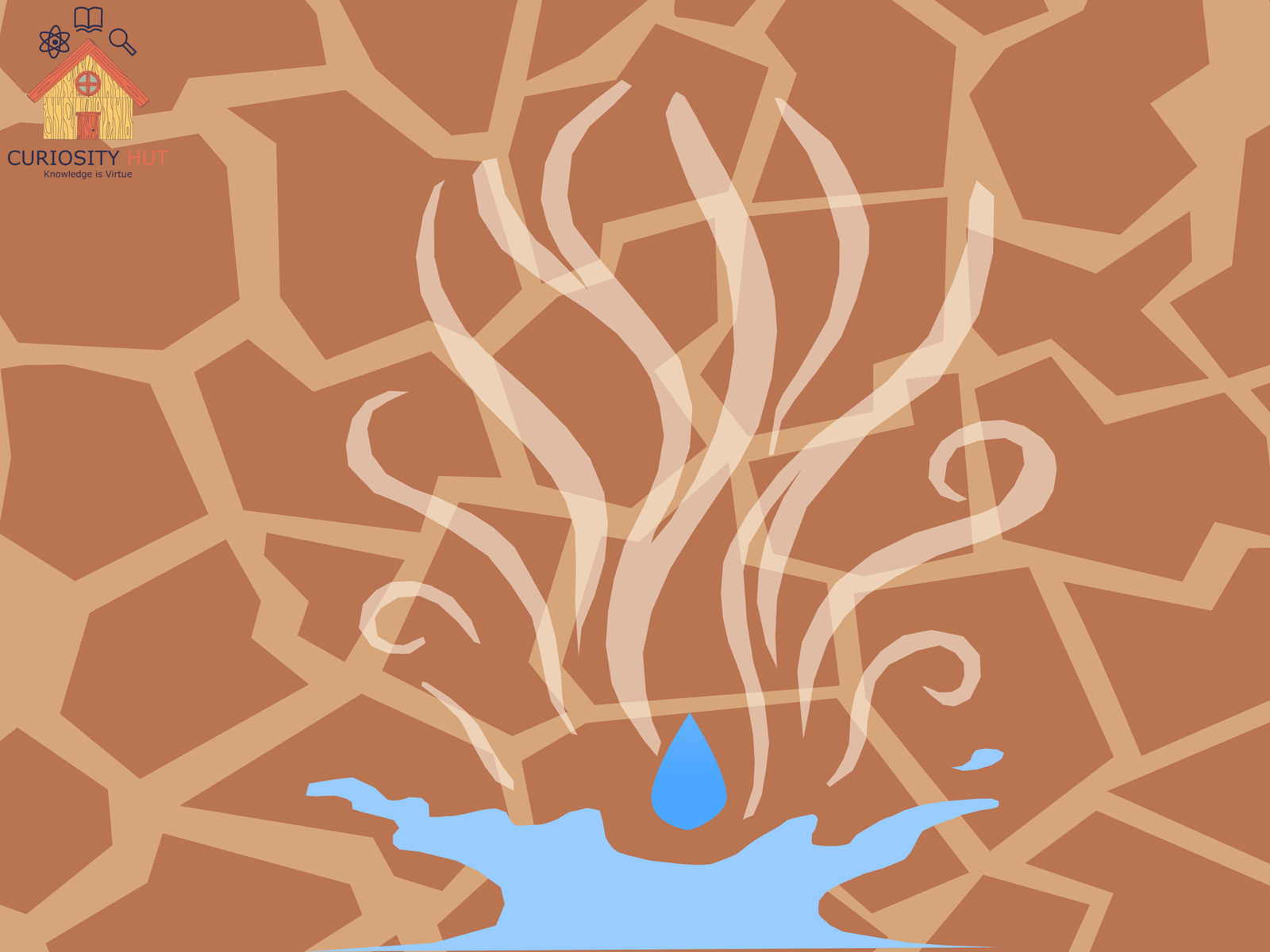
Then the rain arrives. Each falling drop strikes the ground like a tiny drum kick, spraying microscopic particles into the air. Geosmin hitches a ride on those particles and drifts upward—straight into your nose. You’re astonishingly good at detecting it, even at concentrations so low they verge on absurd.
This is why the smell is strongest after dry spells. The longer the wait, the more geosmin builds up, and the louder the earth “speaks” when rain finally falls.
But soil bacteria aren’t working alone. The air and plants join in, too.
When Plants and Storms Add Their Notes
During long dry periods, plants quietly leak protective oils into the soil. Think of them as botanical sunscreen; chemical shields against heat and drought. Those oils sit there, accumulating, until rain loosens them and lifts them into the air, adding warm, slightly sweet notes to petrichor.
Storms contribute their own sharp accent. Before heavy rain, lightning can split oxygen molecules high in the atmosphere. As they recombine, they form ozone, which winds push downward. That’s the crisp, metallic edge you sometimes smell just before a storm breaks.
Together, soil bacteria, plants, and stormy air blend into a scent that feels singular, even though it’s anything but.
And your nose is exquisitely tuned to notice when that blend changes.
How does medicine know where to go?

From bloodstream chaos to molecular precision—and how drugs find their effects without…
Dopamine: Why Your Phone Feels Like a Hit of Life

How a tiny molecule shapes motivation, pleasure, addiction, and modern life. A…
Why Your Nose Knows Before the Rain Falls
Your sense of smell is absurdly sensitive, and rain gives it a helping hand. As humidity rises before a storm, odor molecules linger longer and travel farther. Moist air makes smells easier to dissolve, easier to carry, and harder to ignore.
Rain also stirs the world. Falling drops fling tiny particles from soil and leaves into the air, turning the landscape into an invisible mist of information. Your nose samples that mist constantly, decoding it without asking for permission.
This is why rain can feel like an announcement rather than a surprise. By the time the first drops land, your brain has already gotten the message.
And that still doesn’t explain the most curious part—why we enjoy the message so much.
Why We Love It
Objectively, rain is inconvenient. It soaks clothes, muddies shoes, ruins plans. And yet, its smell is almost universally welcomed.
One explanation reaches back into our evolutionary past. For early humans, rain meant fresh water, cooler air, and land about to turn green. The scent that arrived before or with a storm was a reliable signal that conditions were improving. Over time, that signal may have become emotionally coded as relief.
There’s also memory at work. Smell is tightly wired to the brain’s emotional centers, which is why the scent of rain so easily pulls up childhood afternoons, open windows, or quiet walks home.
By the time you notice the smell, you’re not just reacting to chemistry. You’re responding to history—both human and personal.
There’s one last twist to this story, and it involves trying to capture rain in a bottle.
Bottling the Smell of Earth
The desire to hold on to the smell of rain isn’t new. In parts of northern India, perfumers have been capturing it for decades in a traditional fragrance called mitti ka attar. Clay is baked, soaked, and distilled so that, when rain finally hits dry soil, its scent can be preserved long after the clouds pass.
Today, scientists know the key ingredient behind that fragrance: geosmin. Once just an earthy curiosity, it’s now deliberately added to modern perfumes, an attempt to recreate that fleeting moment when the world smells freshly rearranged.
Which says something important. The smell of rain is brief, but it’s never been forgettable.
It’s the planet exhaling—soil, plants, air, and memory speaking at once.
Subscribe to my Free Newsletter
Sign up for blog updates, science stories, riddles, and occasional musings. No algorithms—just me, writing to you.